
Who is Flock Safety?


 Chief RushTrussville Police Department, AL
Flock Safety Webpage
The Elevator Pitch
Flock Safety is a private surveillance technology company headquartered in Atlanta, Georgia. Founded in 2017, they sell automated license plate reader (ALPR) cameras and related products to law enforcement agencies, neighborhood associations, and private property owners across the United States.
Their pitch to cities is simple: our cameras help solve crimes. Put them up, and stolen cars get recovered. Hit-and-runs get solved. Amber Alerts get answered faster.
That pitch has been extremely successful. As of 2025, Flock operates in over 5,000 communities across 49 states, serving more than 2,000 law enforcement agencies. They are, by a wide margin, the dominant player in the municipal surveillance camera market.
They are also a company worth paying attention to — not because they're evil, but because the gap between what they say they do, what they actually do, and what they're building toward are three meaningfully different things.
The Money
Flock is not a scrappy startup. They're a venture-backed company that has raised over $950 million in funding. In March 2025, they closed a $275 million round led by Andreessen Horowitz, valuing the company at $7.5 billion. They crossed $300 million in annual recurring revenue in 2024, growing roughly 70% year-over-year.
Their business model is subscription-based: cities pay approximately $2,500 per camera per year, plus a one-time installation fee. That subscription covers hardware, software, maintenance, cloud storage, and updates. It's designed to be easy to approve in a municipal budget — low enough that it often doesn't require a major public hearing, high enough that it adds up fast.
Flock was incubated through Y Combinator, the same accelerator that produced Airbnb, Stripe, and Reddit. They were named to CNBC's Disruptor 50 list in 2025. Their investors include some of the most prominent names in Silicon Valley.
This matters because Flock is not going away. They're not a government program that can be defunded. They're a growth-stage private company with aggressive revenue targets and investors expecting returns. Understanding their incentive structure helps you understand their decisions.
Sources:
What the Cameras Actually Collect
Every Flock camera photographs every vehicle that passes it. From that image, the system extracts the license plate number along with the vehicle's make, model, color, and distinguishing features — things like roof racks, bumper stickers, damage, or aftermarket modifications.
Each capture includes a timestamp and GPS coordinates. That data is uploaded to Flock's cloud infrastructure, hosted on AWS Government Cloud.
Flock's default data retention period is 30 days. After that, data is supposed to be hard-deleted. However, individual agencies can negotiate different retention periods based on local policy or law, and there's no independent mechanism for you to verify when — or whether — your data has actually been purged.
The cameras don't just sit passively. Flock offers "hotlist" integration, which means agencies can load lists of plates they're looking for — stolen vehicles, wanted persons, missing children — and get real-time alerts when a match drives past. That's the feature that sounds the most reasonable. It's also the foundation for everything else.
Source:
The Network Effect (This Is the Important Part)
A single Flock camera in one city is a tool. Flock's national network of cameras across 5,000+ communities is something else entirely.
When a law enforcement officer runs a plate search, that search doesn't just check local cameras. It can query the entire Flock network — every camera, every city, every state where Flock operates. That means a plate captured in Grand Rapids can be cross-referenced with hits in Chicago, Detroit, Atlanta, or San Francisco.
Over time, this builds a detailed movement profile: where you go, how often, what routes you take, what times you travel. Not because anyone targeted you, but because the system captures everyone and the data is searchable after the fact.
This is sometimes called a "time machine" capability. Law enforcement doesn't need to decide to surveil you in advance. They can query your plate retroactively and reconstruct your movements from data that was collected passively.
In California, this network effect got Flock into serious legal trouble. A class action lawsuit filed in February 2026 alleges that San Francisco Police Department cameras alone were searched by out-of-state agencies over 1.6 million times in just seven months. The Oxnard Police Department suspended all Flock cameras after discovering that a "nationwide query" feature had been enabled without their knowledge.
Sources:
- Class Action Lawsuit: Flock Safety California Data Sharing
- Courthouse News: California drivers accuse Flock of sharing data
The Security Track Record
For a company that sells surveillance infrastructure to thousands of police departments, Flock's own security history is worth examining.
The breach: Flock experienced a data breach affecting its Condor camera line that allowed unauthorized access to live camera feeds, approximately one month of archival footage, and the ability to delete video from the system. Flock attributed this to a testing configuration issue and said it was promptly corrected.
The hardware vulnerabilities: In November 2025, independent security researcher Ben Jordan published findings showing that anyone with physical access to a Flock camera could press a button sequence on the back of the device to create a Wi-Fi access point, enable developer access, and gain full control of the device. This wasn't a sophisticated hack. It was a button sequence.
The API key exposure: A researcher discovered Flock had hardcoded an ArcGIS API key across 53 JavaScript instances, granting unrestricted access to sensitive surveillance data including license plate detections and police locations nationwide.
The authentication gap: Members of Congress called on the FTC to investigate Flock for failing to enforce multi-factor authentication on accounts that access surveillance data. Flock responded that 97% of law enforcement customers now have MFA enabled — which means 3% of departments accessing a national surveillance network were doing so with just a username and password.
Sources:
- Privacy Guides: Ben Jordan Exposes Severe Security Vulnerabilities
- TechCrunch: Stolen police logins exposing Flock cameras
- Flock Safety data breach report
- GovTech: Flock pushes back on data breach criticism
Where It's Headed (This Is the Part That Should Concern You)
Flock isn't standing still. Their product roadmap suggests a company moving well beyond license plate readers.
People lookup integration: The ACLU documented that Flock is building connections to commercial data broker services that offer "people lookup" capabilities — letting law enforcement "jump from LPR to person." This turns a license plate hit into a name, an address, an identity. Flock long claimed their cameras don't collect personally identifiable information. This new direction makes that claim functionally obsolete.
Video and AI search: Flock now offers police departments video capabilities including live feeds and 15-second clips. Their AI enables natural language searches — an officer could search for "white pickup truck with a ladder rack" and get results. Those video clips capture not just the target vehicle but everyone and everything around it.
Business Network hotlists: Flock launched a product that lets private companies create shared watchlists of vehicles. The ACLU noted this echoes historical private blacklist databases, now automated and operating at scale.
Algorithmic suspicion: Flock's newest service scans movement patterns across its national database to flag vehicles its algorithm considers "suspect" based on behavior patterns. This is a shift from reactive investigation (someone committed a crime, let's find their car) to proactive suspicion generation (this car is acting unusual, someone should look into it).
Each of these features individually sounds like a reasonable law enforcement tool. Stacked together, they describe a system that identifies your car, tracks where it's been, connects it to your identity through commercial data, flags your behavior patterns for algorithmic analysis, and makes all of that searchable by thousands of agencies and private companies.
That's not a camera on a pole. That's infrastructure.
Source:
The Template Agreement (Read the Fine Print)
Flock's standard agreement with agencies includes language granting the company "a non-exclusive, worldwide, perpetual, royalty-free right and license" to "use and distribute Aggregated Data." It also grants Flock the right to "disclose the Agency Data" to enable law enforcement monitoring and provide footage search access.
Read that again: worldwide, perpetual, royalty-free.
Your city signs a contract to put cameras up. The data those cameras collect — your data — gets licensed to Flock under terms that survive the contract itself. The city can cancel the subscription. The license to the data they already collected? That's forever.
Source:
- ACLU: Flock's Aggressive Expansions
- Malwarebytes: Flock cameras shared license plate data without permission
So What Do You Do With This?
Nothing dramatic. Just know who they are.
Flock isn't a shadowy government agency. They're a well-funded tech company with a product that cities find easy to buy and hard to evaluate. They have slick marketing, real crime-solving metrics, and a PR team that's very good at their job.
They also have security incidents, unauthorized data sharing, a roadmap that moves toward comprehensive surveillance infrastructure, and contract language that would make a first-year law student wince.
You can hold both of those things in your head at the same time. That's actually the whole point.
 Aurion Black
Larger picture overview of what Flock means for our privacy.
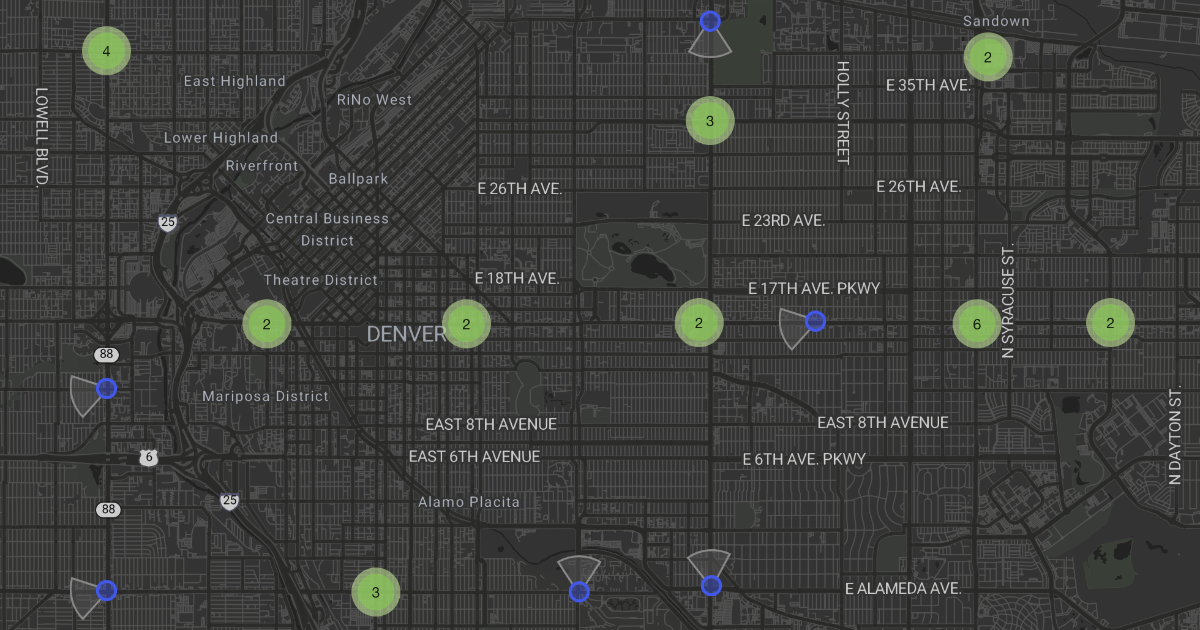
Check out if a Flock Camera is near you!