
Michigan’s HB 5537 Kratom Ban: Rushed Through Without Debate, Built on Misleading Claims

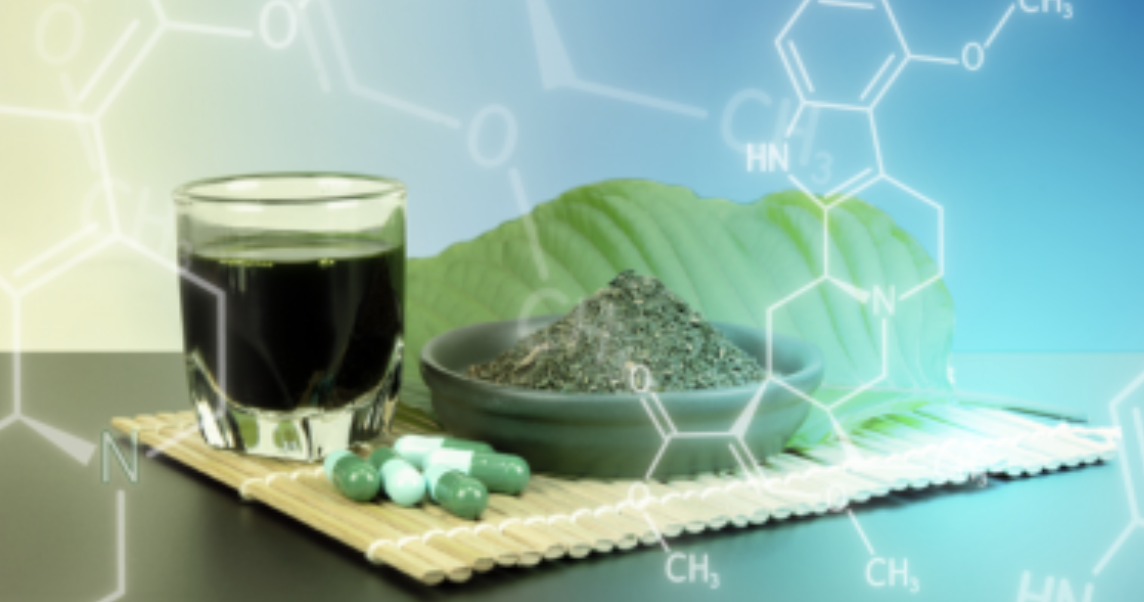
The Michigan House passed HB 5537 on March 18th — a bill that would make it a criminal misdemeanor to grow, sell, import, or distribute kratom in Michigan, carrying up to 90 days in jail and $5,000 in fines for a first offense.
https://www.legislature.mi.gov/documents/2025-2026/billintroduced/House/pdf/2026-HIB-5537.pdf
I’m not here to argue kratom is safe, or that the current unregulated market is acceptable. It isn’t. But the way this bill was pushed through, and the campaign being used to justify it, deserve serious scrutiny.
How It Got Passed
HB 5537 was fast-tracked to the House floor with no committee hearings. It was forced to a roll call vote with no floor debate, a process that took under 30 minutes
The final tally was 56-43, along partisan lines.
No testimony from public health experts. No debate on whether a blanket ban is even the right tool.
When former co-sponsors switched their votes, bill sponsor Rep. Cam Cavitt blamed lobbyist money rather than engage with the substantive arguments.
This is how you pass a bill you know can’t survive scrutiny.
The Fear Campaign and What’s Actually True
On March 23rd, Cavitt appeared on Michigan Public Radio’s Stateside with April Baer to make his case. I want to walk through his specific claims. (https://www.michiganpublic.org/stateside/2026-03-23/stateside-monday-march-23-2026)
“China doesn’t let its own citizens take kratom — they know something we don’t.”
This is the centerpiece of his argument and it collapsed in real time. Host April Baer immediately pointed out that China also bans cannabis and pornography, both legal in Michigan. Cavitt had no real response. The China framing is designed to route a pharmacology debate through national security anxiety. It’s not a public health argument.
“It’s not kratom itself, it’s the chemical component 7-OH.”
This is Cavitt’s most telling moment because he’s correct. He accurately explained that manufacturers synthesize and spike products with 7-hydroxymitragynine (7-OH) to boost potency, and that’s where the real danger lies.
Michigan Medicine confirmed this: “7-OH, which is made in a lab and not from the kratom plant, is 10 times more potent and addictive than the main active component of kratom, and has been associated with fatal overdoses.” (https://bluewaterhealthyliving.com/news/local-news/michigan/michigan-house-passes-kratom-ban-now-what-happens/)
Cavitt diagnosed the actual problem, “Adulterated, lab-synthesized extracts”, then proposed banning the leaf anyway.
“Overdoses are growing — coroners are seeing more and more.”
When Baer asked directly whether the state has kept any statistics on kratom overdoses, Cavitt said: “No, they’re just discovering more and more as the product is getting more pervasive. Coroners are starting to screen for it.” He admitted his “growing overdoses” claim is based on increased detection, not established causation.
More screening finds more presence. That’s not the same thing.
The peer-reviewed literature backs this up:
- A 2024 commentary in Frontiers in Psychiatry concluded that most kratom-associated fatalities involve polydrug exposures, and that deaths may “erroneously include kratom as a contributory but not causative agent, even if other substances are present.”
Crucially: no causative lethal blood concentration for mitragynine has ever been established in humans. (https://pmc.ncbi.nlm.nih.gov/articles/PMC11153780/)
- A 2024 Frontiers in Pharmacology review found that in controlled NIDA studies, whole-leaf kratom administration produced no respiratory depression and all vital signs remained normal.
No lethal dose for kratom or its alkaloids has been established. (https://www.frontiersin.org/journals/pharmacology/articles/10.3389/fphar.2024.1403140/full)
- A 2019 study in Preventive Medicine estimated the risk of overdose death from opioids is over 1,000 times greater than from mitragynine alone. (https://pubmed.ncbi.nlm.nih.gov/31647958/)
- A systematic review on kratom overdose risk found the overwhelming majority of cases with severe outcomes involved polydrug co-ingestion, not kratom alone. (https://www.kslegislature.gov/li_2024/b2023_24/committees/ctte_h_fed_st_1/documents/testimony/20230201_16.pdf)
“It’s marketed to children.”
When Baer asked if anyone had actually researched what percentage of buyers are under 18, Cavitt said: “That’s a great question and not that I’m aware of. No.”
The entire children-at-risk framing is built on packaging aesthetics (gummy bears and cotton candy flavors) with zero consumption data to support it and missing the point that regulation would solve this.
Lastly, He got the basic botany wrong.
Cavitt called kratom “a byproduct of a conifer tree” and claimed China is the number one producer. Kratom (Mitragyna speciosa) is a tropical hardwood in the coffee family, native to Southeast Asia.
Indonesia is by far the largest producer, Not China.
These aren’t minor errors. They suggest someone working from talking points, not research. (Calling Oxycontin “oxytocin” is a minor error and also shows he doesn’t really care about the science)
What I Did
I wrote a measured letter to Rep. Cavitt, my own representative, and the Regulation Reform Commission acknowledging that the current unregulated market is a legitimate problem, particularly the unregulated 7-OH extract products, and making the case that the Kratom Consumer Protection Act framework (age restrictions, labeling requirements, product testing, 7-OH concentration limits) is the appropriate policy response.
I didn’t hear back from any of them for weeks. Not because they were busy. Because the media campaign was already in motion.
What Needs to Happen
The bill now goes to the Michigan Senate, where Democrats hold the majority. This is where it can be stopped or redirected toward actual evidence-based regulation. If you want to contact your senator, you can find them at (https://senate.michigan.gov/senators/all-senators/)
My argument isn’t “kratom is safe.” It’s that a blanket criminal ban on a plant, pushed through without debate, justified by factual errors and fear framing, and aimed at the wrong target, is bad policy and governance.
Regulate the extracts. Require testing and labeling. Set age restrictions. Don’t criminalize adults for using a leaf while the actual dangerous products (unregulated synthetic 7-OH) get swept into the same prohibition and will simply move to the black market.
Wisconsin and Indiana banned it. People just drive to Michigan to buy it. Cavitt mentioned this himself as evidence the ban is working. It isn’t. It’s evidence prohibition doesn’t work.
Sources linked throughout. Happy to discuss in comments.
-UPDATE-
I reached out to Senator Mark Huizenga about HB 5537 and have received a response from his office (before the Cam Cavitt interview on Stateside):
"Good morning,
Thank you for contacting our office and expressing your concerns surrounding HB 5537, which aims to prohibit a person from growing, synthesizing, selling, offering for sale, giving, importing, or distributing kratom or a synthetic variant of kratom.
While this bill has passed the House and has been transmitted to the Senate, it has yet to be introduced in our chamber; it will likely head to the Senate committee on Regulatory Affairs upon its introduction.
With that said, at this stage, our office does not have purview over the legislation. The senator is aware of this bill, and our legislative team is actively researching and reviewing the bill as passed by the House. As with most legislation, HB 5537 is likely to undergo further alterations as it moves through the committee process in the Senate, and it is Senator Huizenga’s longstanding policy to not decide on a yes vote or a no vote until he has had the opportunity to review each bill in their final form.
Please know that I have shared your message directly with the senator and our legislative team to keep in mind as the bill progresses.
Thank you again for contacting our office."
Even though I am pleased I got a response, I found it lacking substance (even if its from his office and not form the Senator himself). So I responded:
"Thank you for the response regarding HB 5537. While I truly appreciate the effort in making me feel like my concerns and questions are being addressed, I am not satisfied with this response.
I understand that the bill has not yet been formally introduced in the Senate, I am writing back because the "wait and see" approach does not address the alarming lack of transparency and due process that occurred in the House.
As my Senator, I am looking for a more substantive understanding of your position on the following three points:
- Procedural Integrity: HB 5537 was moved to a rollcall vote by Speaker Matt Hall with virtually no floor debate. For a bill that criminalizes a substance used by thousands of Michiganders for health and wellness and recreation, do you believe "no-debate" fast-tracking is an appropriate way to handle significant changes to the Michigan Penal Code?
- Regulation vs. Prohibition: You have been a leader in creating the Opioid Advisory Commission to ensure "evidence-based assessments" of substance use in our state. A blanket ban on kratom ignores the nuance between the natural plant and the dangerous, adulterated "gas station" synthetics. Why is the state congress considering a total prohibition (which creates a black market, pushes people to more dangerous options, reduces personal freedom, and hinders the ability to promote public health) rather than the Kratom Consumer Protection Act model, which would regulate purity and restrict sales to minors?
- Public Health Impact: Many veterans and citizens in your district use kratom as a tool to avoid the very opioids you have fought so hard to combat.
Has your legislative team researched the potential "rebound effect" of a ban, which often drives individuals back to far more dangerous, illicit substances?
I am not asking for a final "yes" or "no" on a hypothetical future version of the bill. I am asking where you stand today on the principle of personal freedom versus government overreach regarding a natural plant that simply needs better oversight, not a blanket ban.
This is a nuanced issue and the response I received, while appreciated in principal, leaves a lot to be desired given the fact that I still have not received responses from the bills sponsor, Cam Cavitt (or anyone from the regulation reform board) and that this was forced to a rollcall vote in the house.
I get that you and your team have not been able to fully research the details of this bill, yet it got rushed through the house.
It honestly feels like our elected officials have made up their minds and don’t care about personal freedom, public health, or the voice of the voters.
I look forward to a more substantive response
Thanks,"